Especial Los Angeles
Assistindo Los Angeles acender as luzes do Griffith Observatory
Uma cúpula gratuita, um planetário de US$ 10, uma subida de 50 minutos por um jardim de samambaias e um jantar a cinco minutos de descida: como montar um dia inteiro em Los Angeles em torno de um único ponto no alto da colina.
Por Tobias LindqvistThe city on foot and by Metro
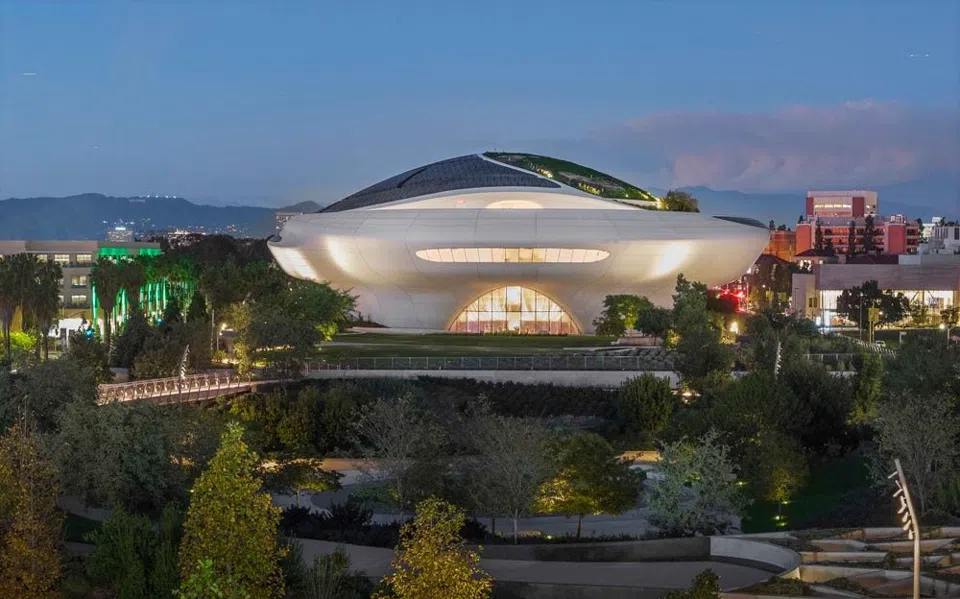
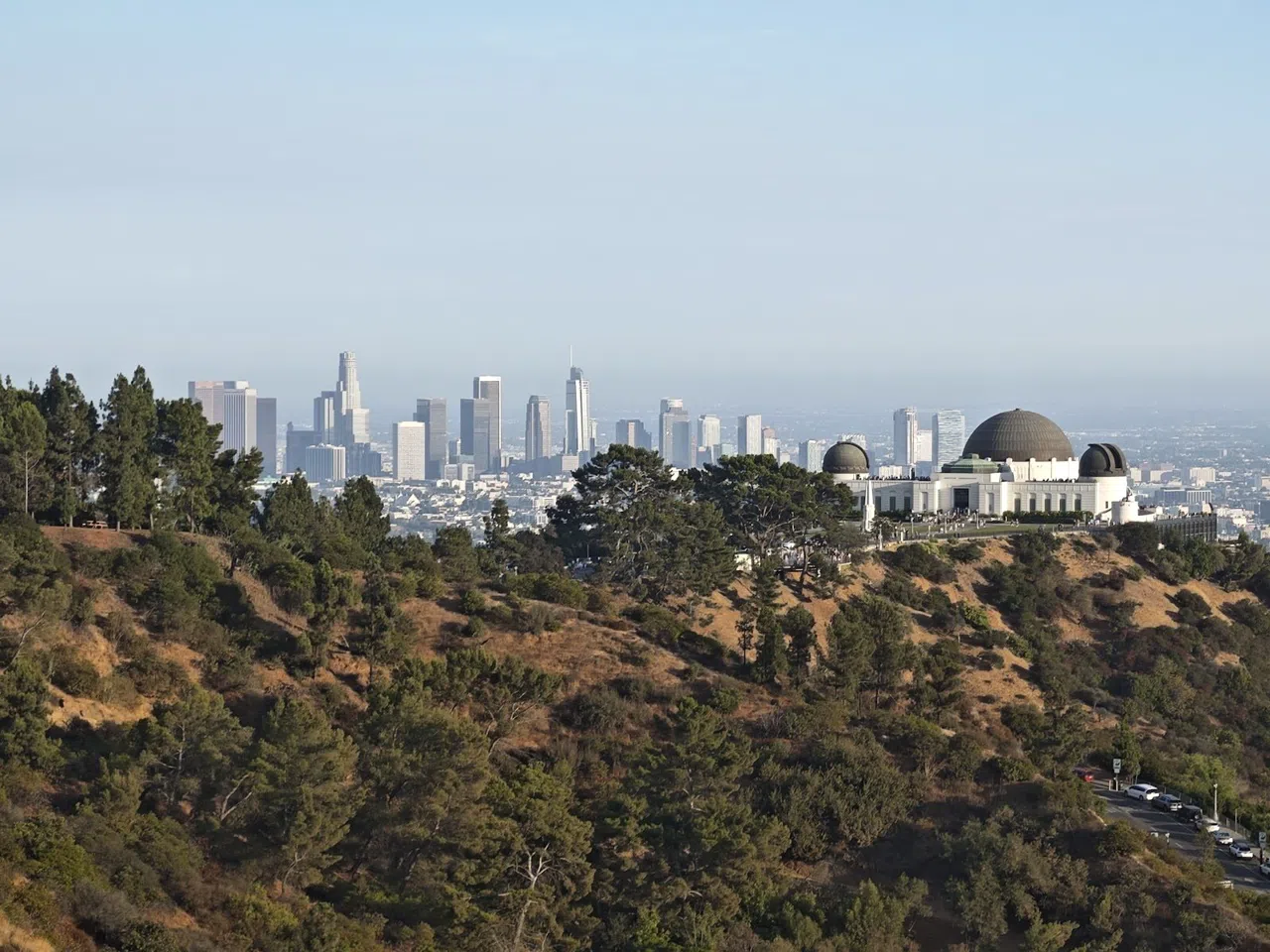
The road up Mount Hollywood ends at a white concrete dome that was somebody's 1930s idea of the future, and at dusk it still reads that way. On a clear February evening you can stand at the parapet with the telescope queue forming behind you and watch the basin come on in patches, downtown first, then the long grid running west toward the airport. On a hazy August afternoon you get maybe four miles of soft grey and a sun that goes orange and then dissolves into it. Worth knowing before you spend your one free evening driving up a hill.
What the building actually gives you
Griffith Observatory (Griffith Park, above Los Feliz) is free to walk into. There is no reservation system, no timed entry and no capacity booking. You arrive, you are in. The only thing inside with a price on it is the 35-minute show in the Samuel Oschin Planetarium, and it is modest: $10 for adults, $8 for seniors, students and teachers, $6 for children aged 5 to 12. Those tickets are sold same-day, on-site only. You cannot pre-book that show at any price, from anyone, and plenty of people arrive assuming they have missed a booking window that never existed.
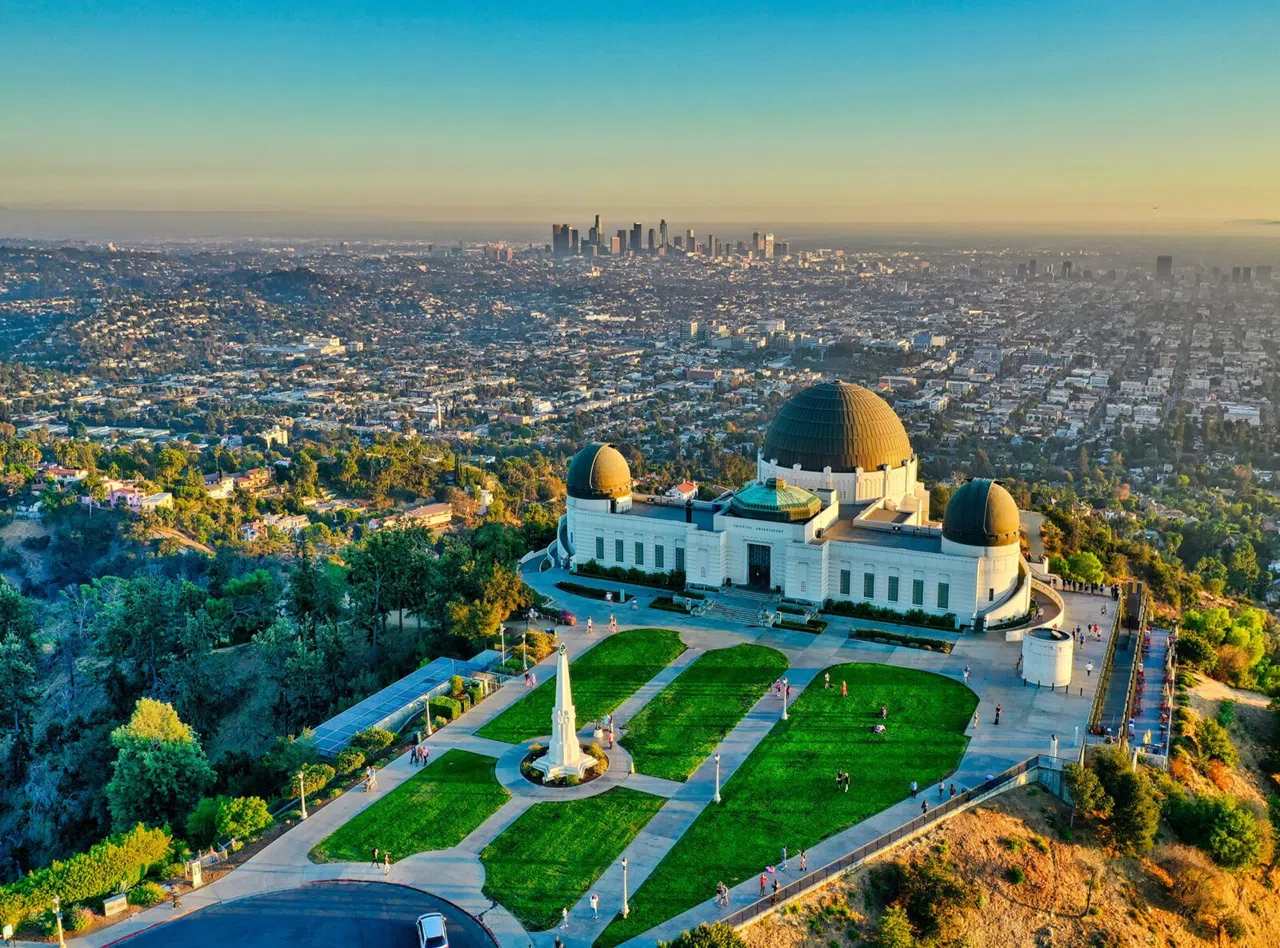
For nothing at all you get the rotunda with its 1935 ceiling murals and a Foucault pendulum turning under them, the solar telescopes in the hall of the sky, a camera obscura, and a lower level where one wall is given over to a single enormous scaled image of a patch of sky. Outside, the terrace wraps three sides of the building, and on clear nights the Zeiss refractor in the east dome is open to the public from 7:00 to 9:30 p.m., also free, staffed by people who will tell you what you are looking at.
Griffith J. Griffith gave the city more than 3,000 acres of this hillside in 1896, then left money for an observatory and an amphitheatre. The dome opened in 1935 as a public science building rather than a research one; it was always meant for the city to walk into. Being a civic building also means a civic schedule. It is closed on Mondays, and on weekdays it does not open until midday.
Planeje sua viagem para Los Angeles
Preços em tempo real dos nossos parceiros de reserva.
Cancelamento grátis em muitos quartos. Podemos receber uma comissão quando você reserva.
How long a visit really takes
The exhibits take 45 minutes to an hour if you read things, less if you don't. Add 35 minutes for the planetarium, plus whatever you spend in the ticket line. Add another hour if you want the terrace for sunset and the city lights afterwards, which is the part most people actually came for. Add 20 to 40 minutes of standing if you want the Zeiss queue on a clear night.
So the honest range is 90 minutes for a brisk look, three hours for the full evening sequence of exhibits, show, sunset and telescope. An hour or less gets you a photograph of the view and not much else.
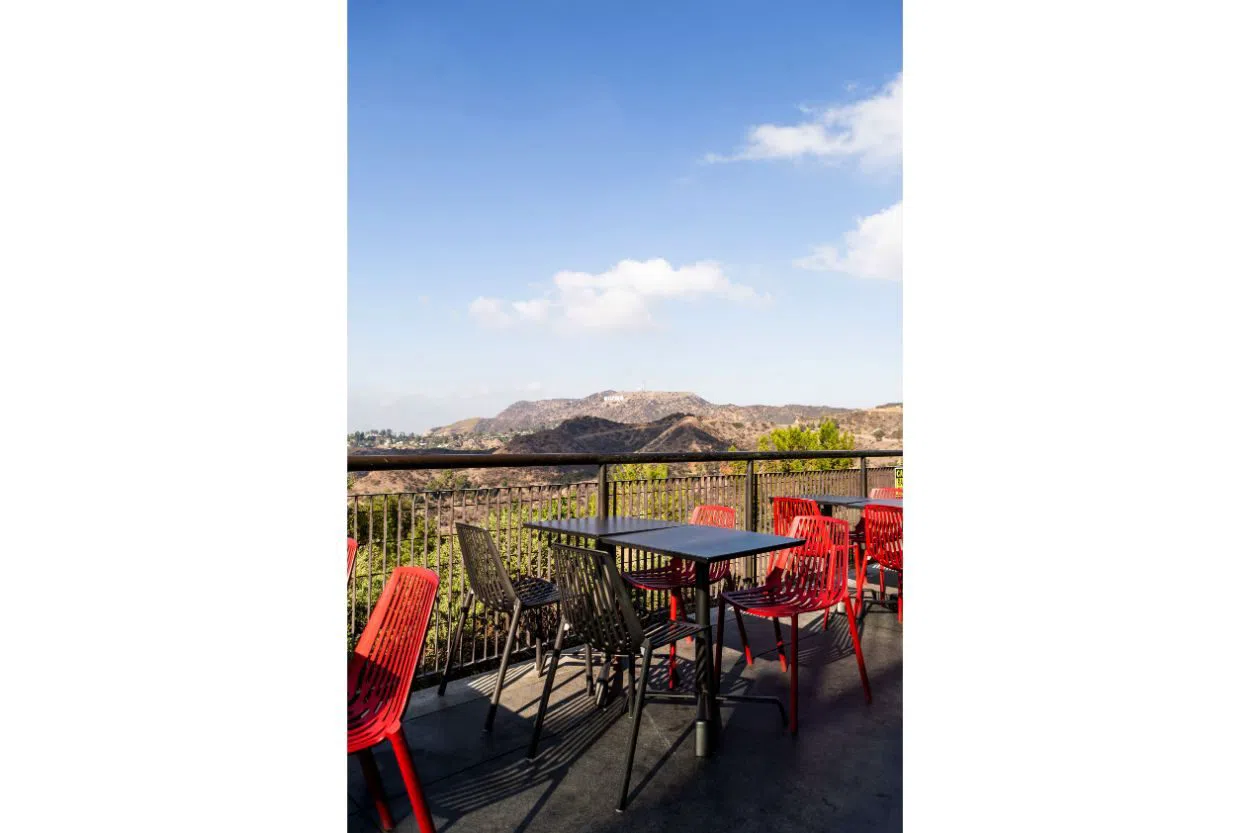
If you stay for the whole arc you will get hungry. The Café at the End of the Universe (inside the observatory's lower level) is the only food up there: counter service, no bookings, $8 to $20 a head. Timing matters more than the menu. The hot counter shuts roughly an hour before the café itself does, so a late arrival gets grab-and-go. The small indoor room fills quickly; the Sunset Terrace outside absorbs groups far better and has the view, so take your tray out there.
Queues, the door and whether to book anything
Entry is never the bottleneck, because entry is free and unticketed. Three things queue: the roadside parking on the hill, the planetarium ticket desk, and the telescope. Arriving earlier than feels necessary handles all three.
For the planetarium, go straight to the desk when you walk in and buy the next show you can live with, then do the exhibits around it. For the telescope, join the line before 8 p.m. rather than at 9:15.
A guided option exists if you would rather not drive at all. Full-day sightseeing tours that include this stop run seven days a week and start from 99 USD per person. Across the bookable tours attached to this attraction there are 16,115 traveller reviews, and the top one holds 4.9 out of 5 from 6,690 of them, so the format is well-tested. A tour takes the driving and the parking off you and takes the evening with it, because a daytime coach itinerary puts you on the terrace in flat afternoon light rather than at the hour the place is actually about. Coaches also cannot park here; they drop and leave, so group leaders need a staging plan and a fixed pickup time agreed before anyone gets off the bus.
Walking up through Fern Dell
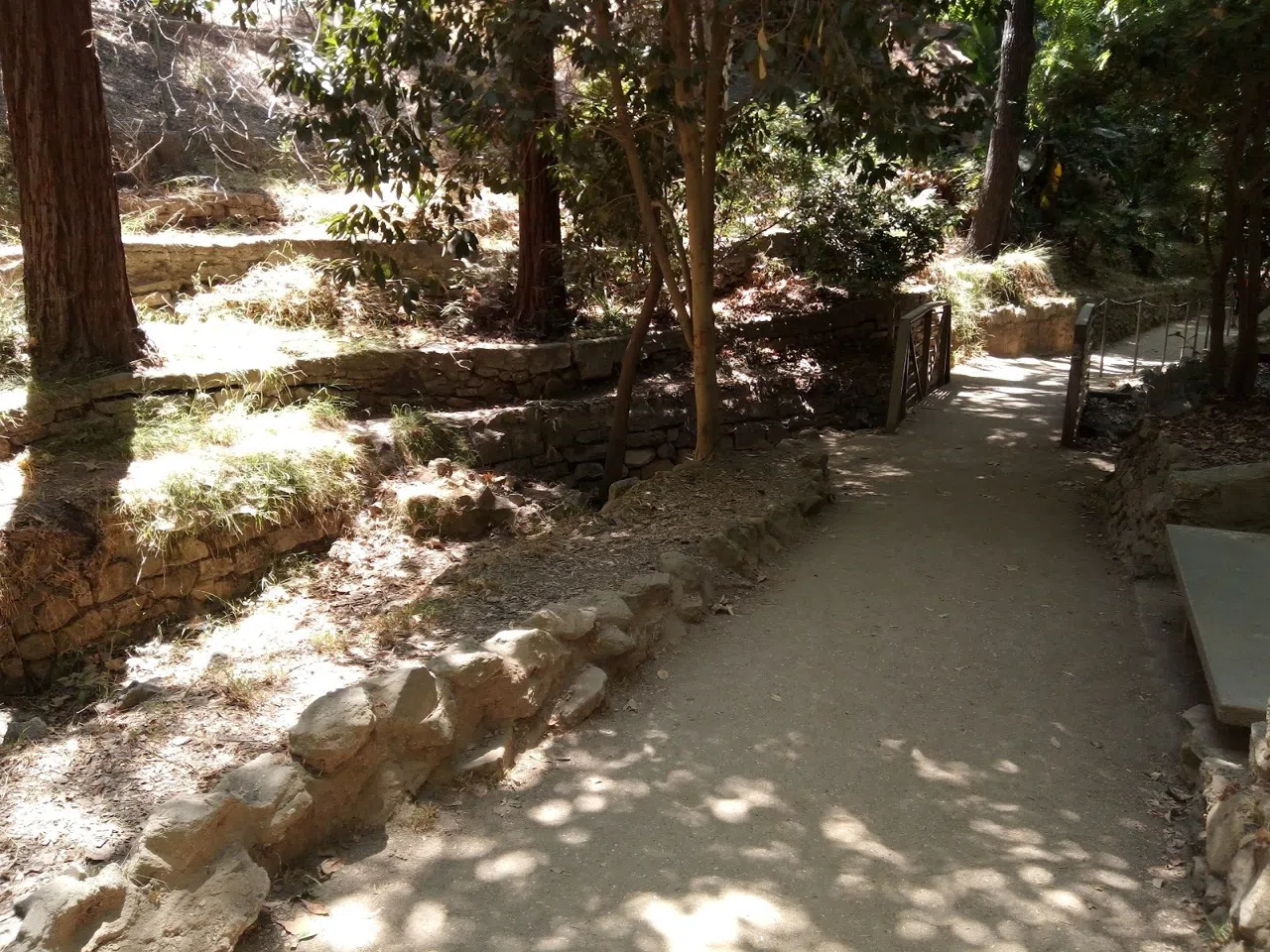
The approach that makes the building feel earned starts at the bottom. The Fern Dell Nature Trail (Los Feliz) is a public path with no limits and no fee, following a stream through planted ferns and stone bridges in deep shade, cool and green and nothing like the dry chaparral hillside that begins 200 metres above it. From here the standard uphill route to the observatory takes roughly 50 to 60 minutes at a steady pace. It is single file in places, so a large group will string out; agree a regroup point rather than shouting up the path.
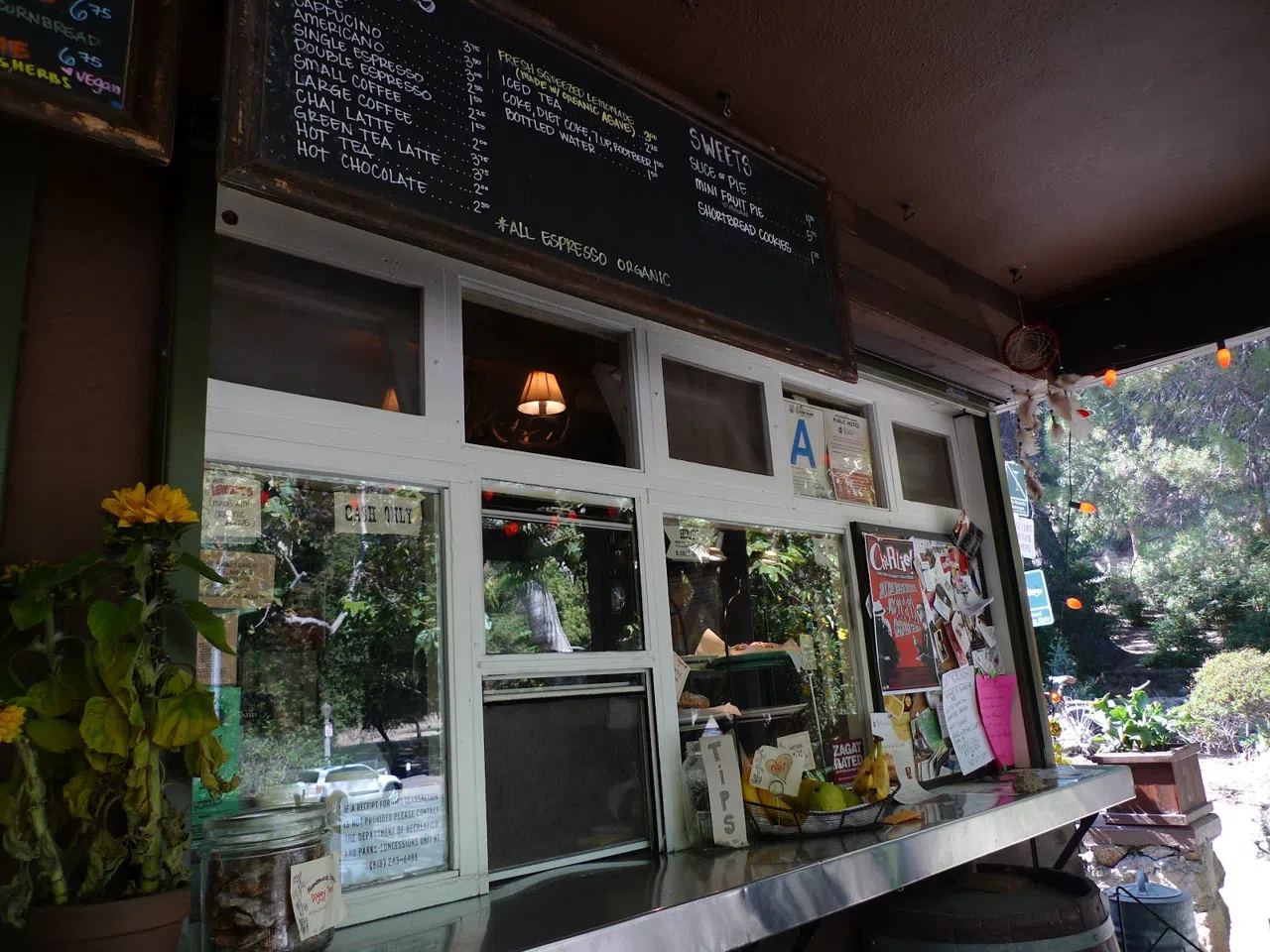
Start it properly at The Trails (Fern Dell, Los Feliz), a walk-up outdoor coffee counter and bakery at the bottom of the climb, $5 to $15. No reservations, outdoor tables only, and they fill fast at weekends, so expect to stand. The hours matter more than the menu: sandwiches do not start until 10 a.m., so come early for pastries or later for lunch, and it closes mid-afternoon and shuts one day midweek. Check before you build a morning around it.
Parking, the Greek Theatre and arriving without a car
The Greek Theatre (Griffith Park, Los Feliz side) is the practical parking answer. Its lot doubles as free downhill parking for observatory walkers, which saves you circling the metered roadside spaces up top. The exception is firm: not after 1 p.m. on show days. A concert night removes that parking and clogs the single road up the hill, so check the season calendar, which runs May to November, before you commit to an evening.
The theatre is also an evening in its own right. It opened in 1930 as the other half of Griffith's bequest, it is genuinely outdoors, and tickets run roughly $45 to $150 depending on the act, with group blocks sold through the venue rather than resellers.
Without a car: take Metro's B Line to Vermont/Sunset, then the LADOT DASH Observatory shuttle, which runs up the hill for a fare of well under a dollar and drops you at the door. It operates weekday afternoons and evenings and from the morning at weekends, matching the building's own hours. Of everything here, this is the change that makes the most difference to an evening, because it removes the parking problem entirely. Rideshare works too, though the queue of cars leaving after full dark is slow in both directions.
The morning gap and how to fill it
Because the observatory stays shut until midday on weekdays, a full day here needs a morning. Four options sit inside the same park.
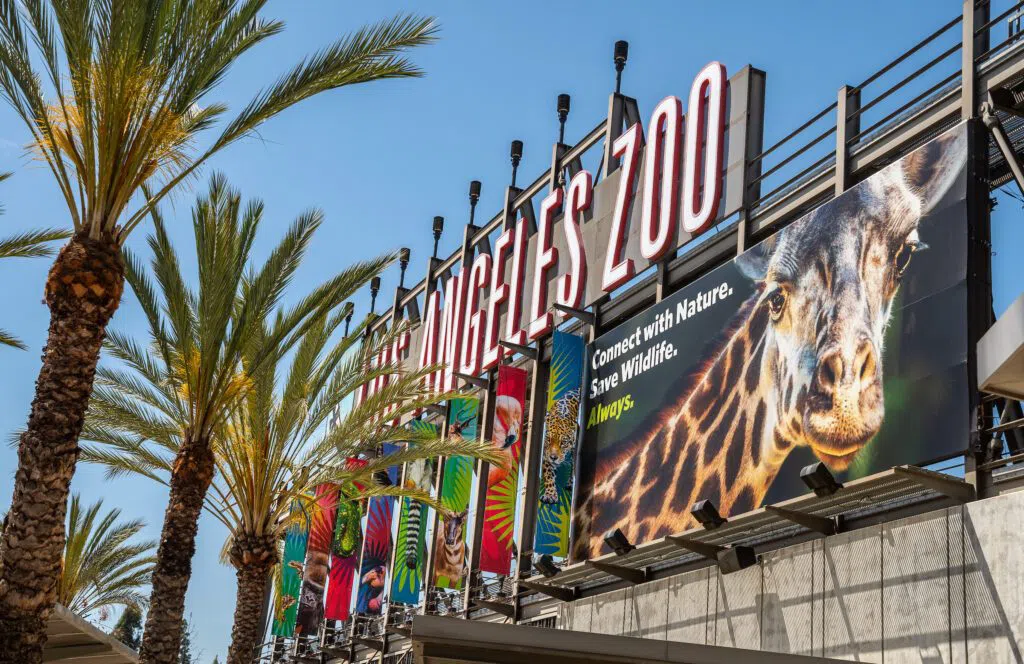
The Los Angeles Zoo and Botanical Gardens (Griffith Park) is the obvious daytime half of a full-day pairing, at $27 for adults, $24 for seniors 62 and over, $22 for children 2 to 12, and free under 2. It handles groups properly, with advance group rates, school bookings and coach parking on site. Last entry is 3:45 p.m., which settles the order of your day: zoo first, observatory for sunset.
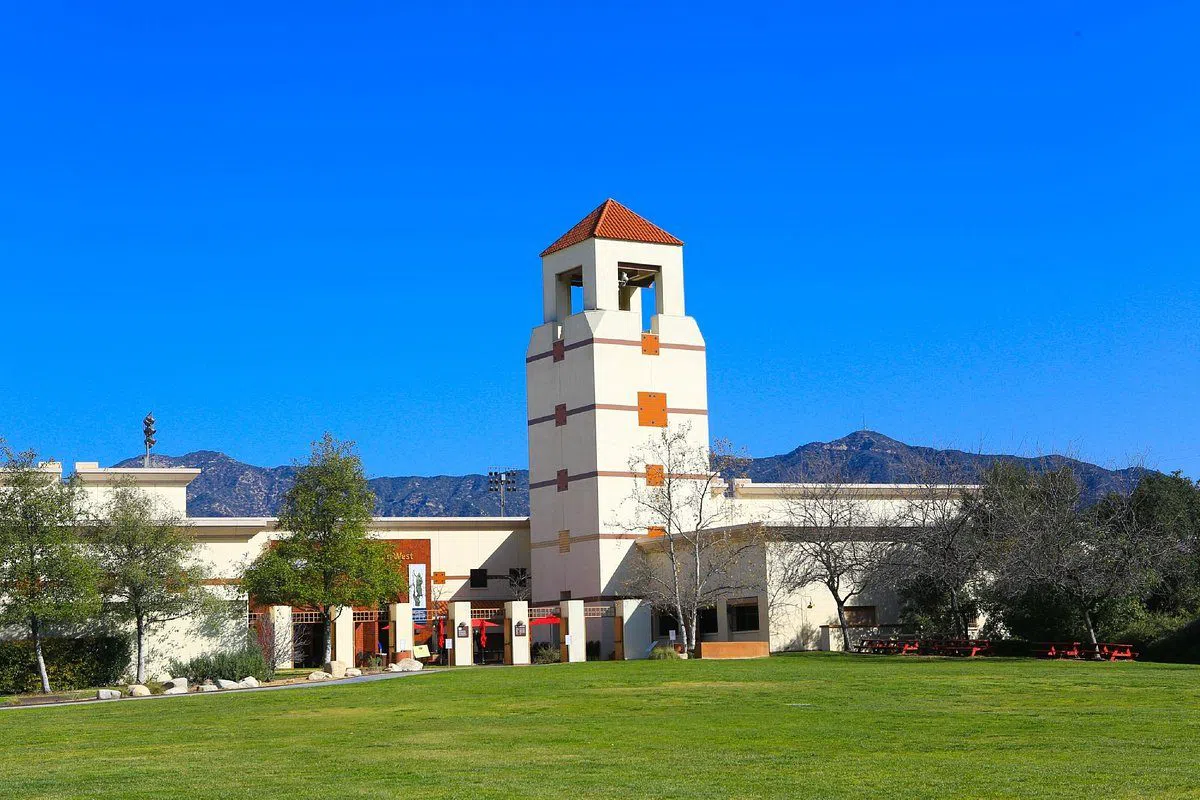
The Autry Museum of the American West (Griffith Park, opposite the zoo) is the serious indoor alternative, $20 adult, $15 student or senior 62-plus, $9 child 3 to 12, and free on the first Wednesday of the month with timed registration. It opens at 10 a.m. Its Native American galleries are the reason to go, the history underneath the version Hollywood exported, and parking is free, which makes it easy for coaches and self-drive groups alike.
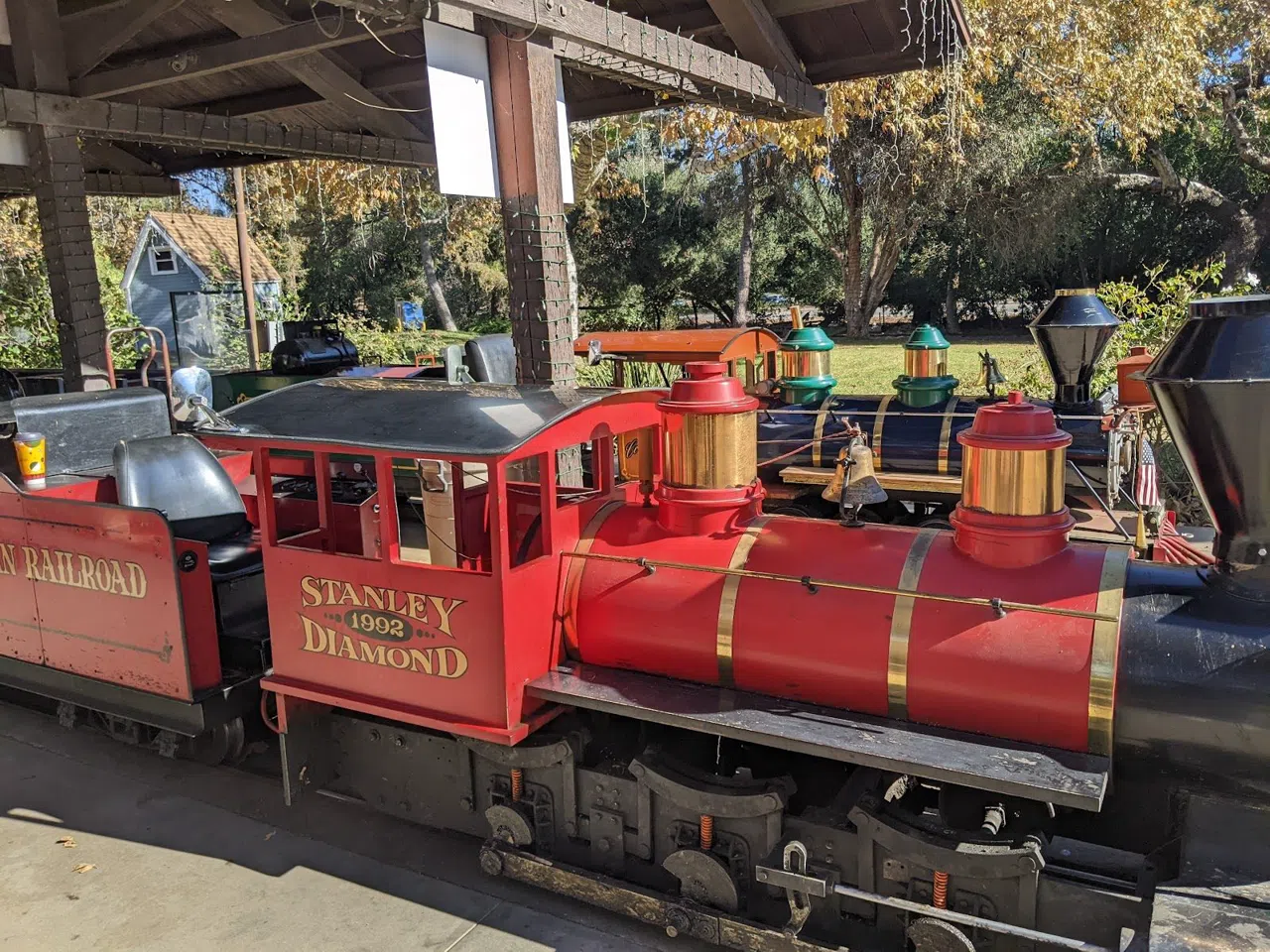
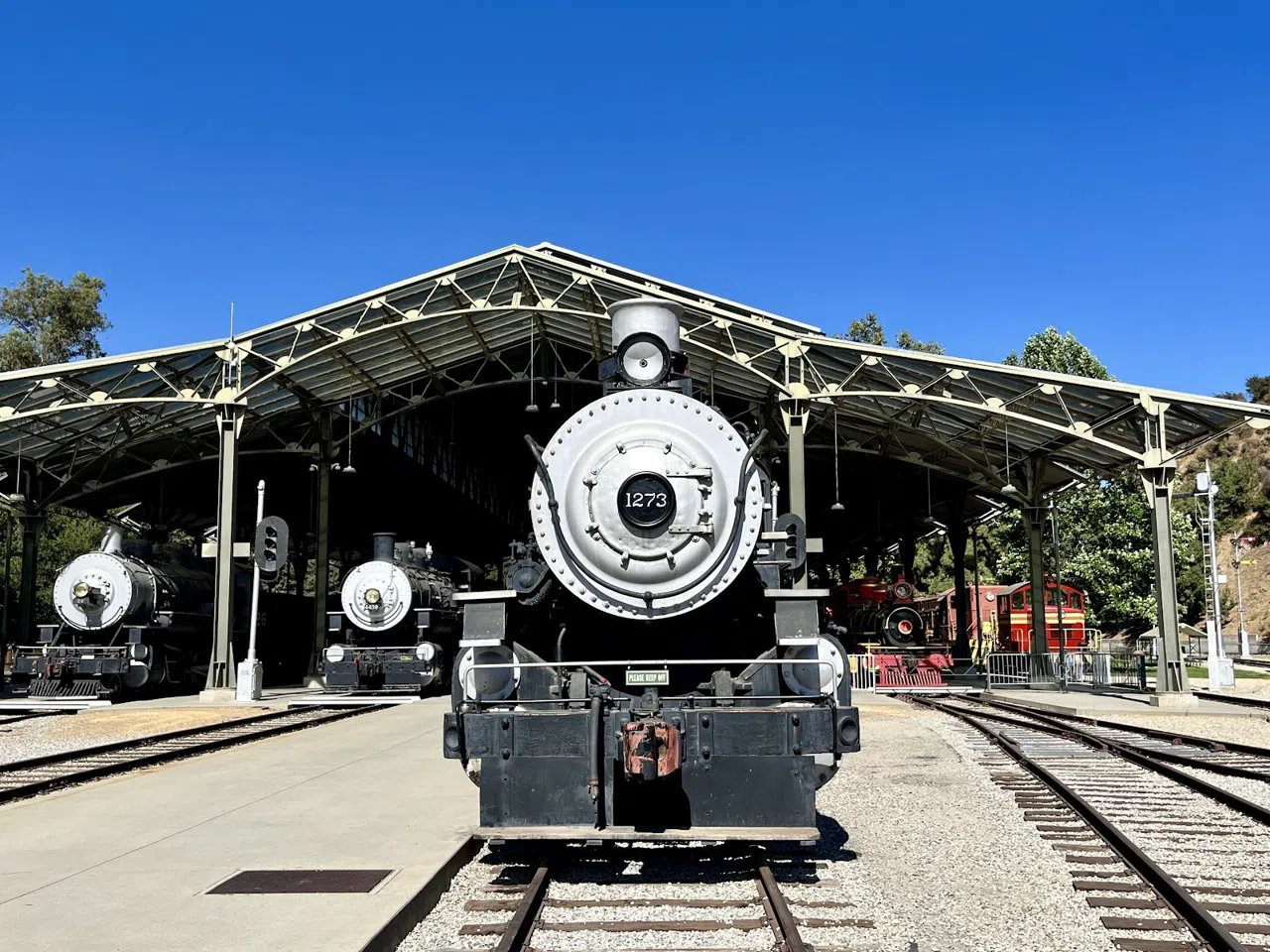
With small children, Travel Town Museum (north end of Griffith Park) is free, unticketed, outdoors and full of retired steam locomotives you can walk among; it opened in 1952 and feels it, in a good way. Donations are encouraged, the miniature ride costs a few dollars, parking is free, and it takes booked school and birthday groups. It closes Mondays, like the observatory. Nearby, the Griffith Park & Southern Railroad (Crystal Springs, Griffith Park) runs a 15-minute miniature train ride for about $5, walk-up only, with the queue as the sole constraint. The pony rides that used to sit beside it closed permanently in December 2022 and have not returned, so do not promise a child a pony.
Trails, a quarry and a horse
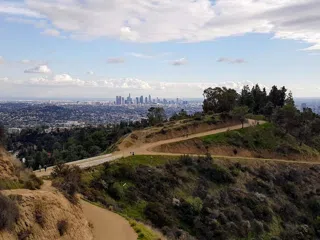
From the observatory's own door, the Charlie Turner Trailhead & Mount Hollywood Trail (Griffith Park) runs three miles round trip to the highest viewpoint in the park. It is an unrestricted public trail with no size limit and no fee, and it is the most reliable way to turn a one-hour stop into a half-day. There is no shade and no water once you leave the building, so carry water; a large group needs to carry a lot of it. Hikers in 2026 report a short closed section just above the observatory with a signed detour; follow the signs rather than the map on your phone.
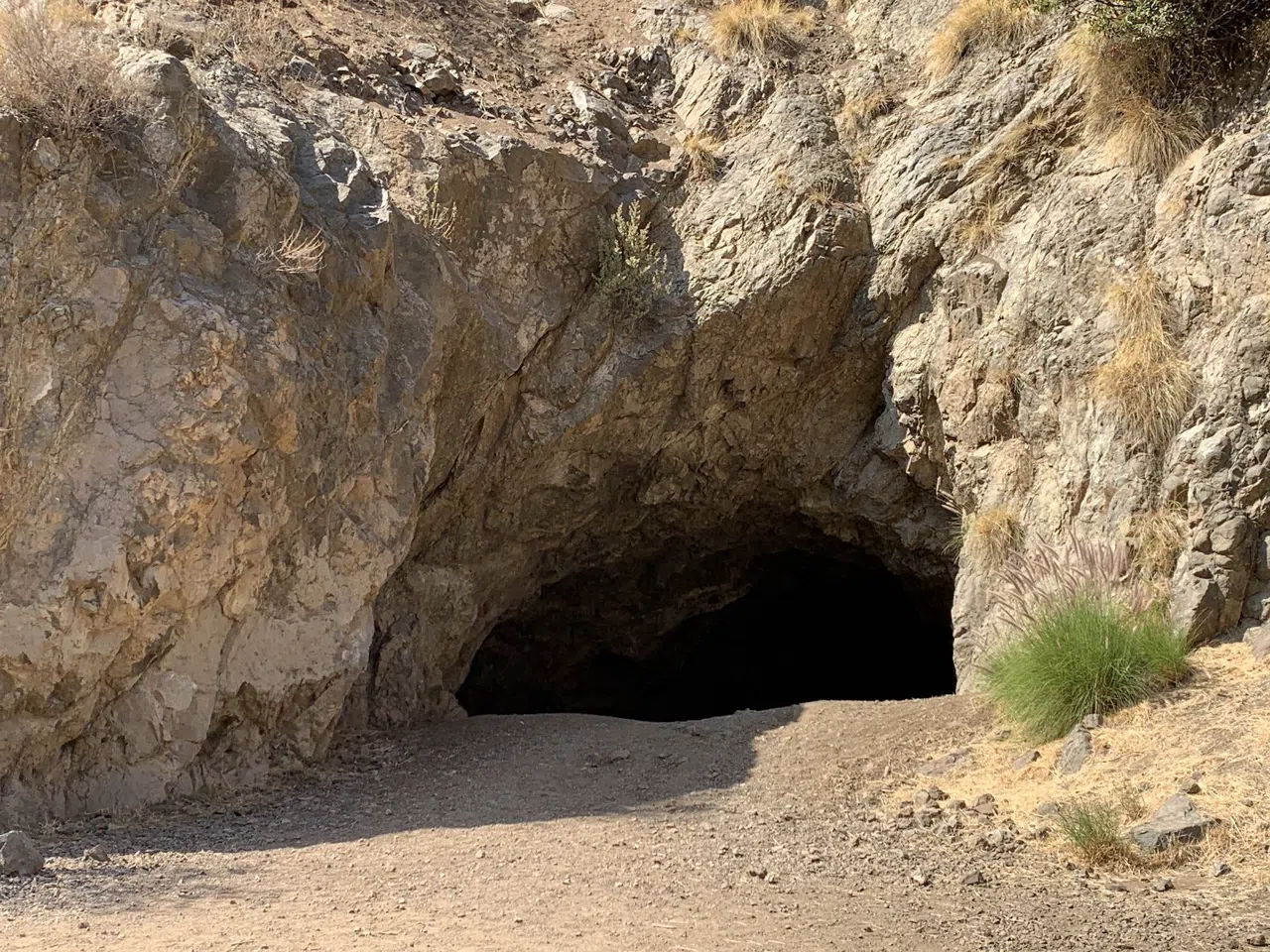
Bronson Canyon (Bronson Caves) (Canyon Drive, Hollywood) is a 0.7-mile stroll to a set of tunnels cut by a rock quarry in the 1910s and used since as the 1960s Batcave and the backdrop to a hundred other shoots. Access is free and open. Parking, not the trail, is the bottleneck for groups. Visitor reports through 2026 mention fencing at the tunnel mouths, so treat walking inside as not guaranteed and go for the setting rather than the photograph.
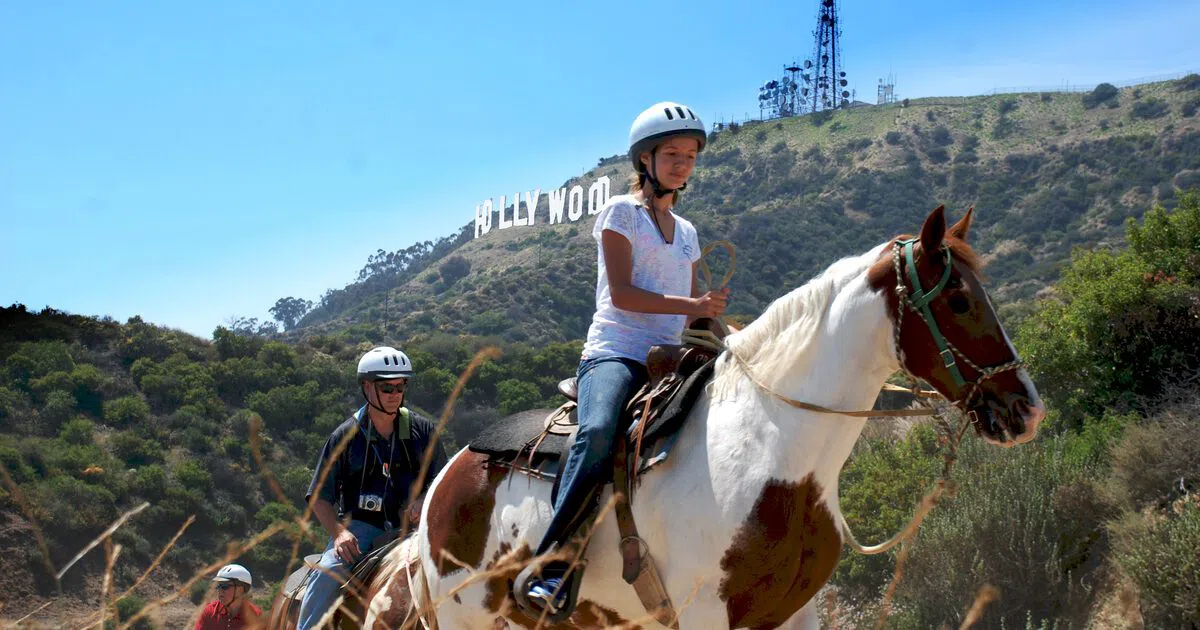
Sunset Ranch Hollywood (Beachwood Canyon) oferece a única versão dessa encosta que um ônibus de turismo não consegue reproduzir, a partir de cerca de US$ 75 por adulto no passeio de uma hora pela Mulholland Trail. Não é preciso ter experiência com cavalos. Grupos precisam reservar com antecedência, porque o número de cavaleiros é limitado pela quantidade de cavalos, mas há vagas sem reserva quando os cavalos estão disponíveis. Reserve o passeio noturno e você estará na crista quando as luzes da cidade se acenderem. Confirme os limites de peso e idade na hora da reserva, não ao chegar.
Onde o letreiro fica bonito
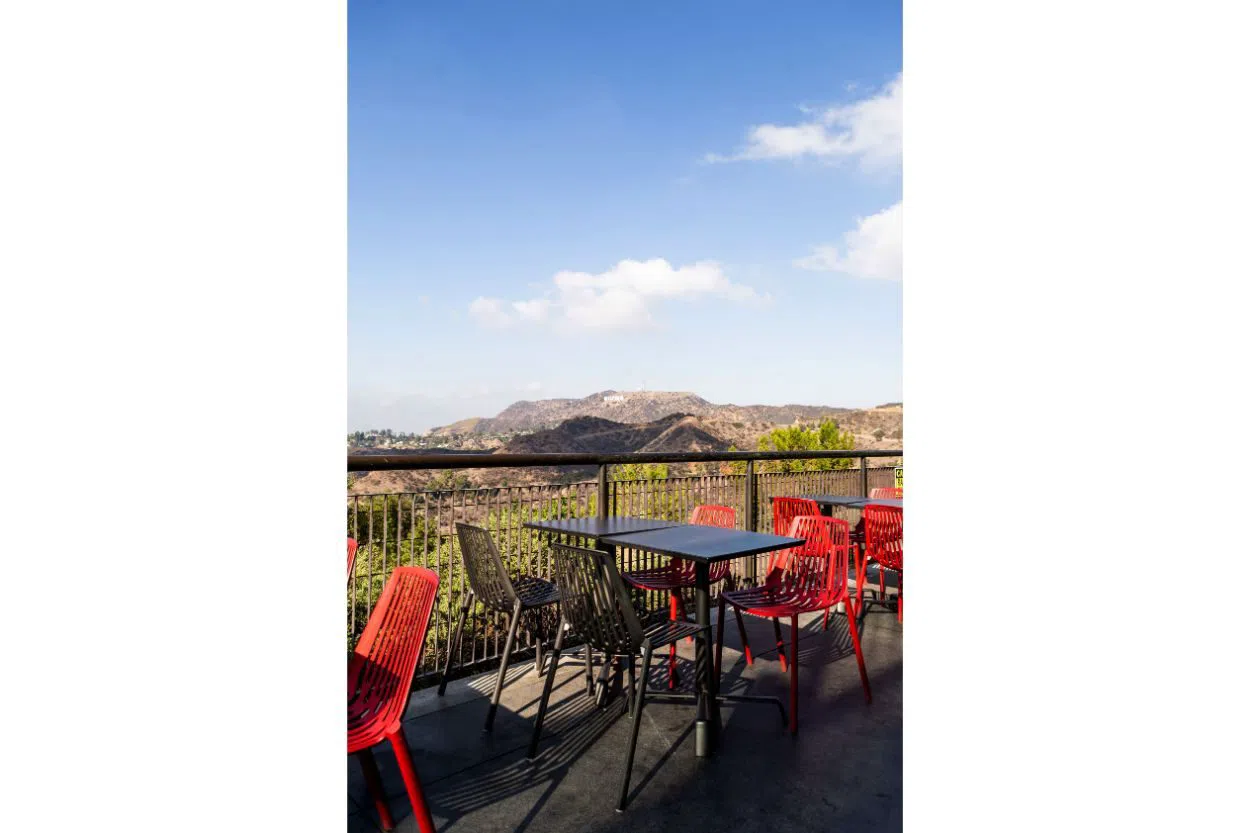
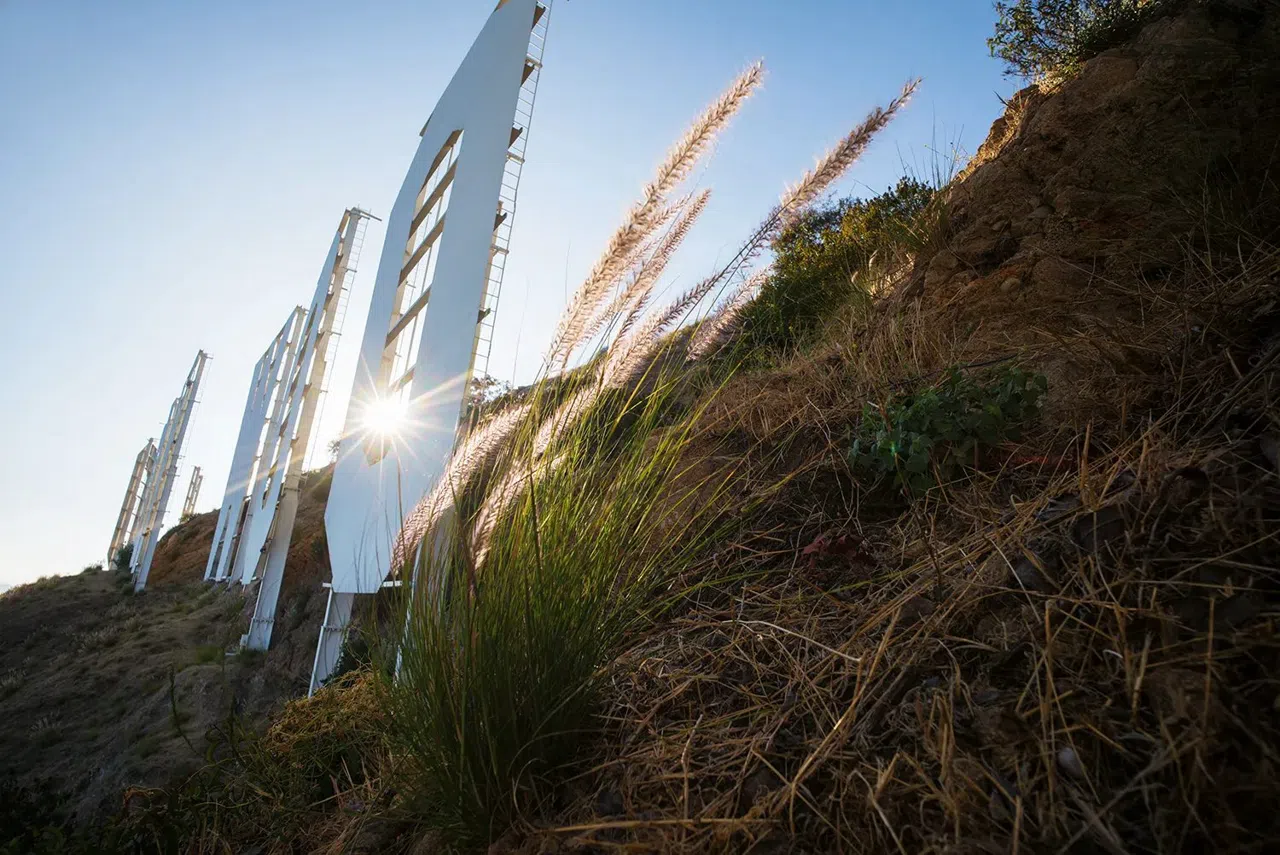
Do terraço do observatório, o letreiro de Hollywood fica distante e de lado, e as pessoas sempre se decepcionam um pouco. O contraponto honesto é o Lake Hollywood Park (Colinas de Hollywood), a vista mais limpa das letras, sem trilha, gratuita e aberta do nascer ao pôr do sol, sem limite de uso da grama. O problema é totalmente ligado a carros: estacionamento apenas na rua, fiscalização rigorosa de área residencial, placas de “No Turnaround” (proibido manobrar) aplicadas com rigor e nenhum acesso para ônibus de turismo. Chegue cedo ou vá de aplicativo de carona, e seja um visitante discreto. Esta é a rua de alguém.
Arquitetura e jantar ladeira abaixo
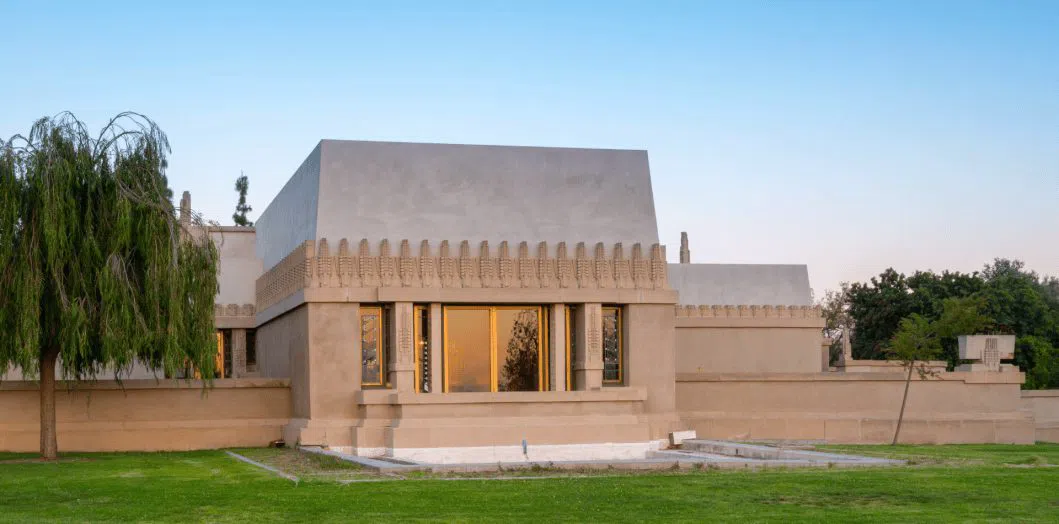
A dez minutos de descida, a Hollyhock House (Barnsdall Park, East Hollywood) é a parada de arquitetura mais marcante da região: a primeira encomenda de Frank Lloyd Wright em Los Angeles, concluída em 1921 e inscrita como Patrimônio Mundial da UNESCO. A visita é autoguiada de quinta a sábado, com horários guiados aos domingos; ingresso de US$ 12 para adultos, US$ 6 para idosos de 62 anos ou mais e estudantes de 18 anos ou mais; menores de 18 anos entram grátis acompanhados de um adulto pagante. Recomenda-se muito comprar ingressos antecipados, e os grupos guiados são propositalmente pequenos. A casa abre apenas alguns dias por semana, então planeje a visita em torno dela, em vez de passar por acaso.
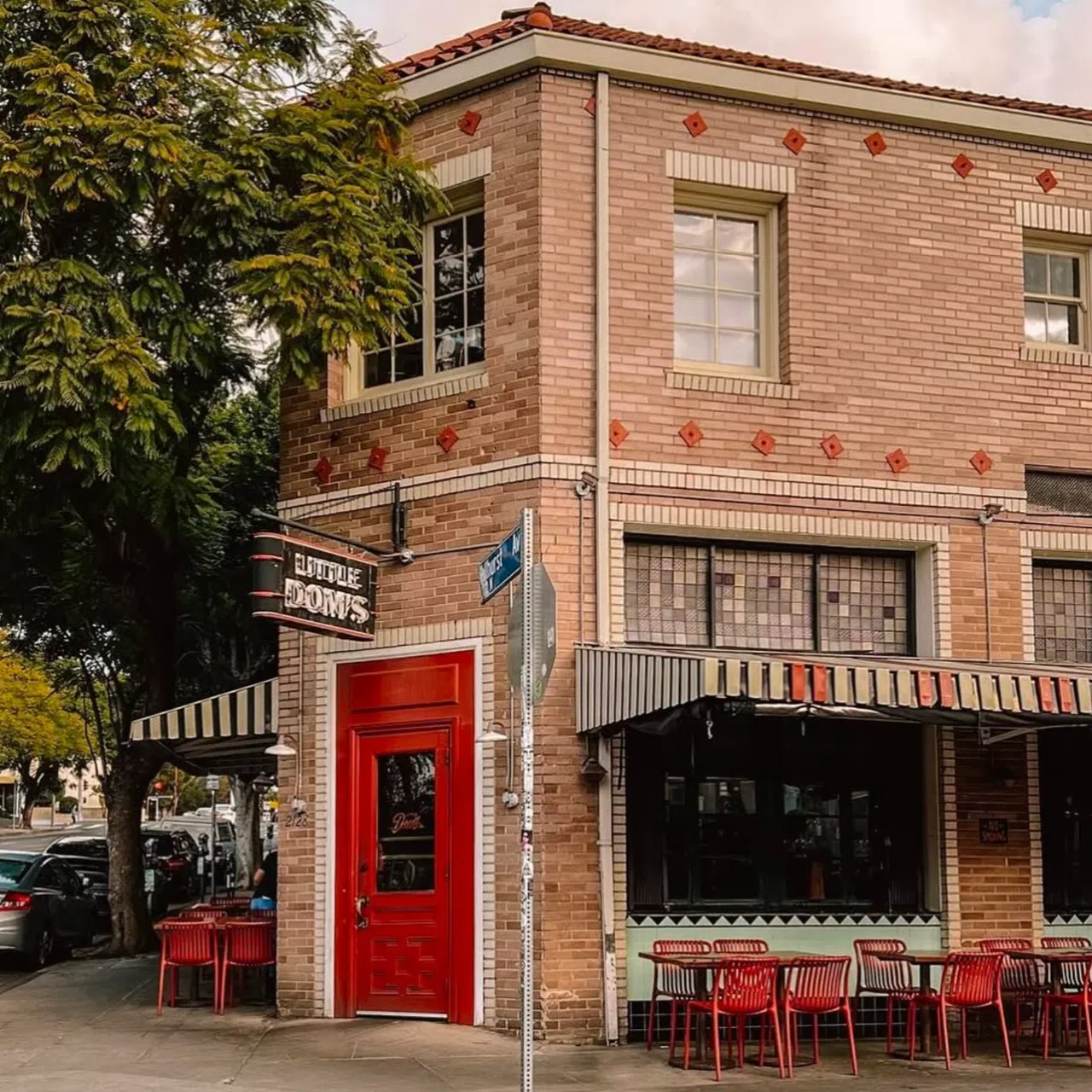
Para jantar, o Little Dom's (Los Feliz) fica a cinco minutos do portão Fern Dell do parque; pratos principais de US$ 25 a US$ 50, cozinha ítalo-americana e sem pretensão. As reservas são feitas pela página de reservas online; grupos de dez pessoas ou mais são atendidos por um e-mail específico para grupos, e o restaurante realmente guarda mesas. O brunch de fim de semana aqui, antes de uma trilha pela manhã, funciona tão bem quanto um jantar depois de uma trilha à noite.
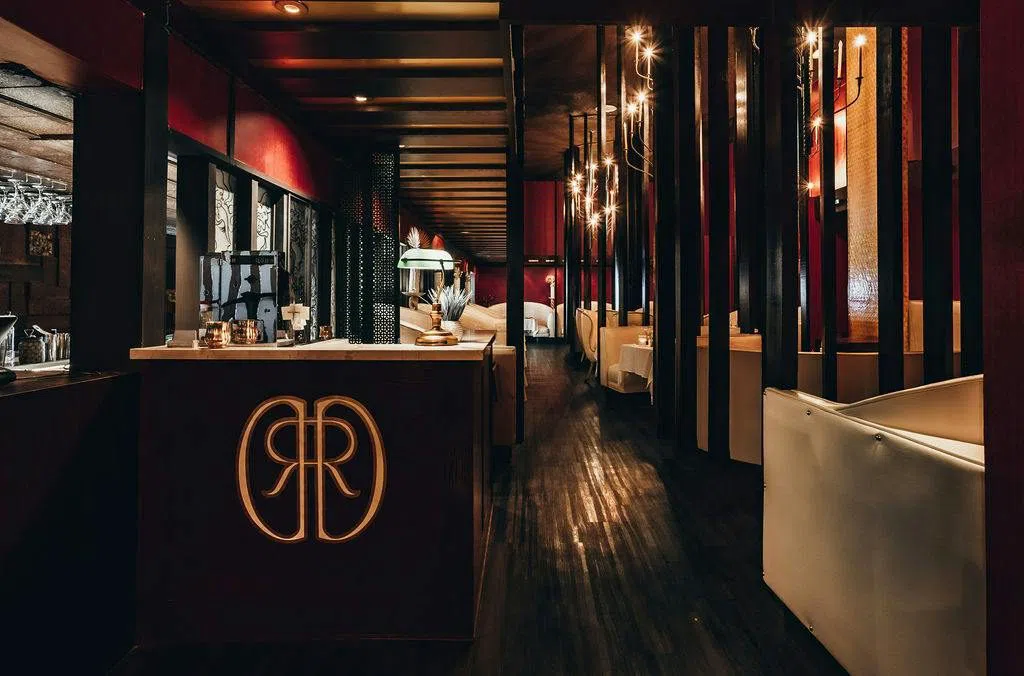
Depois, The Dresden (Los Feliz) é uma cápsula do tempo, e não um bar temático. Abre às 17h todos os dias, sete noites por semana; drinques e petiscos custam de US$ 20 a US$ 40 por pessoa. Aceitam-se reservas e o salão atende grupos, mas o ambiente é pequeno, então reserve. Como abre às cinco, funciona apenas como fechamento da noite, e não como parada para almoço antes da subida.
Vale a pena?
Sim, com uma condição: vá para o fim do dia, e não para o meio. O prédio é gratuito, as exposições são melhores do que o “grátis” costuma oferecer, e a única parte paga custa US$ 10. Por outro lado, você está dirigindo ou pegando um transporte por uma colina congestionada para ficar em meio a uma multidão. O que torna a visita valiosa é a sequência: o crepúsculo no terraço, depois a fila do Zeiss, depois as luzes. Essa sequência só existe depois do anoitecer.
Serve bem para casais e viajantes solo, porque nada precisa ser reservado e nada exige um grupo. Serve bem para famílias se você combiná-lo com o trem ou com o Travel Town mais cedo no dia. É mais difícil para grandes grupos: não há estacionamento para ônibus, nem ingressos para grupos, nem nada reservado, e a cafeteria tem uma pequena sala interna. Grandes grupos devem considerar o terraço como o destino principal e o prédio como um bônus.
Quando ir
O horário do dia importa mais do que tudo aqui. Chegue de 60 a 90 minutos antes do pôr do sol. Assim você tem as exposições à luz do dia, o terraço para o pôr do sol em si e a fila do telescópio após as 19h. Visitas ao meio-dia são a versão mais fraca: luz chapada, concreto quente e o planetário como único motivo para ficar em ambientes fechados.
Depois vem o dia da semana. Segundas-feiras estão descartadas, pois o prédio fecha. As noites de terça a quinta são as mais tranquilas. Os fins de semana abrem mais cedo, ao custo de multidões e de um problema maior de estacionamento. Evite as noites de espetáculo do Greek Theatre, a menos que o show seja o motivo da sua viagem.
A estação define até onde você consegue enxergar. Inverno e início da primavera, especialmente depois da chuva, oferecem o ar mais limpo e as vistas longas mais nítidas, e o pôr do sol chega cedo o bastante para que você desça para jantar em um horário normal. No verão vêm a névoa e uma camada de nuvens marinhas que pode ficar sobre a bacia por dias; as luzes da cidade continuam funcionando, mas as montanhas distantes não. Para o telescópio Zeiss, você precisa de uma noite clara e com pouca lua, e essas noites se concentram no outono e no inverno.
Informações práticas
Como chegar: a linha B do Metrô até Vermont/Sunset, depois o ônibus DASH Observatory, é a rota mais simples e custa alguns dólares no total. A pé, comece em Fern Dell e reserve de 50 a 60 minutos de subida. De carro, estacione gratuitamente no estacionamento do Greek Theatre e suba a pé, mas não depois das 13h nos dias de espetáculo, ou arrisque as vagas de rua com parquímetro na própria colina, cobradas por hora.
Dinheiro: cartões são aceitos em todos os lugares, mas guarde um pouco de dinheiro vivo para o trenzinho em miniatura e para doações. Um dia realista para duas pessoas, bem aproveitado: nada para o observatório, US$ 20 por dois ingressos para o planetário, US$ 25 no café ou US$ 20 no balcão de cafés, e de US$ 80 a US$ 120 para jantar e beber ladeira abaixo. Some US$ 54 se quiser o zoológico, US$ 40 para o Autry, US$ 24 para a Hollyhock House ou US$ 150 para dois em passeio a cavalo.
Horários: nada nesta colina pode ser reservado, exceto os restaurantes, a casa-museu e os cavalos. Reserve esses três e improvise o resto. Para dormir perto do parque, comece pela busca de hotéis em Los Angeles; para o restante da cidade, incluindo os bairros abaixo do parque, veja o guia geral de Los Angeles. Leve um agasalho, não importa a previsão. A cúpula fica a 1.100 pés de altitude, e o vento aumenta quando o sol se põe.
Antes de ir
O Griffith Observatory é gratuito para visitar?
Sim. O prédio, as exposições e o terraço são gratuitos, sem reservas e sem horário de entrada marcado, então você simplesmente entra. A única coisa paga é a sessão de 35 minutos do Planetário Samuel Oschin: US$ 10 para adultos, US$ 8 para idosos, estudantes e professores, e US$ 6 para crianças de 5 a 12 anos. A observação pública pelo refrator Zeiss, das 19h às 21h30 em noites claras, também é gratuita.
Dá para reservar ingressos do planetário com antecedência?
Não. Os ingressos para o planetário são vendidos no local, apenas no mesmo dia, e não podem ser reservados com antecedência por nenhuma fonte. Compre no balcão assim que chegar, escolha o próximo horário de sessão que lhe for conveniente e aproveite as exposições enquanto isso.
Como chegar ao Griffith Observatory sem carro?
Pegue a linha B do Metrô até a estação Vermont/Sunset e depois o ônibus DASH Observatory da LADOT, que sobe a colina por bem menos de um dólar e para na porta. A pé, comece na Fern Dell Nature Trail, em Los Feliz, e reserve de 50 a 60 minutos para a subida. Aplicativos de carona funcionam, mas sair depois do anoitecer é lento.
Que horas devo chegar para o pôr do sol e o telescópio?
Planeje chegar de 60 a 90 minutos antes do pôr do sol. Assim você consegue ver as exposições à luz do dia, o terraço para o próprio pôr do sol e a fila do telescópio Zeiss, que abre às 19h. Entre na fila antes das 20h, em vez de perto do fechamento, às 21h30. O observatório fecha às segundas-feiras e abre apenas ao meio-dia nos dias de semana.
Dá para ver o letreiro de Hollywood a partir do observatório Griffith?
Dá para ver, mas ela está distante e de lado, o que surpreende a maioria dos visitantes na primeira vez. Para uma vista de frente e de perto, sem trilha, vá ao Lake Hollywood Park, nas Colinas de Hollywood. A entrada é gratuita e o parque funciona do nascer ao pôr do sol, mas há apenas estacionamento na rua, com fiscalização rigorosa de área residencial e sem acesso para ônibus de turismo.